Monday, December 6, 2021

And it did all the things we designed it to do

The final class I taught at BC was a section of Lit Core, the introductory class non-majors take to fulfill their English gen ed requirement. Professors are permitted to get a little fun and funky with their Lit Core syllabi (as opposed to more advanced courses, studiously focused on exposing English majors to significant literary periods and theories). I called my Lit Core class "Fictional Science and the Body Monstrous," and we spent the semester reading works that use representations of science and experimental medicine to think about what it means to be human -- Frankenstein, The Island of Dr. Moreau, Never Let Me Go, stories by Ursula Le Guin and J.G. Ballard, etc. 

One soggy spring morning in 2018, our class was studying a short story by Octavia Butler called "Speech Sounds." The story is set in a dystopian near-future Los Angeles, which (along with the rest of the world) has been ravaged by a pandemic that has left survivors unable to use or understand written or verbal language. Everyone is also more emotionally volatile, aggressive, and prone to violence in the wake of this loss. A woman named Rye attempts to take the bus to Pasadena to meet up with her brother, and this previously simple journey is made terrifyingly perilous by the widespread mayhem wrought by the pandemic's aftereffects.

Science fiction often leans didactic: pretty much everything we read for my Lit Core class had obvious messages for the reading audience (e.g., Frankenstein as a commentary on scientific hubris). So, we tended to spend class time probing texts for their less obvious themes (e.g., Frankenstein as a commentary on formal versus informal education systems), learning how to close-read the text to discern and appreciate the subtleties. Butler's story -- rife with miscommunication, suspicion, and violence -- clearly wants us to consider the extent to which humanity, and the noble qualities we like to associate with it, depends on language. 

So, I would ask my students, pointing them to specific passages or language patterns, what else is going on in this text? What other social dynamics or themes does Butler's story want us to think about? How do you know?

The first student who responded to this prompt that day in March had a surprising take: She felt like the story was about screen time, she said. The detachment of the characters, their inability to empathetically interact in casual in-person situations, reminded her of the increasing sense of isolation people are experiencing as they get drawn further and further into their phones. The societal breakdown in the story seemed to her a dramatization of the "smart phones and social media are ruining society" rhetoric she routinely sees, taken to its natural/extreme conclusion. I saw nods of agreement ripple across the class as she spoke.

I reminded my student that Butler published "Speech Sounds" in 1983, well before widespread use of the internet, let alone smart phones, and that the specific set of concerns associated with "screen time" just didn't exist then. Still, I reassured her, that didn't make her interpretation invalid. 

In fact, there's a whole domain of literary criticism, called Reader Response Theory, that foregrounds the ways texts will resonate differently when encountered by different audiences and contexts. A Reader Response critic will pay special attention to something that other critics tend to downplay: the fact that we don't experience art in a vacuum, that the things we notice and appreciate about art depend (sometimes a lot) on when and where we were born and what experiences we've gathered along the way. Consider how differently you and I experience Romeo and Juliet compared to an Elizabethan playgoer. Sure, Butler didn't intend for her story to be about screen time, but does Butler's intent actually matter? If her story inspires a contemporary reader to think deeply and differently about how they engage with social media, isn't that interpretation valuable?

Plenty of literary critics out there, dusting off the shoulders of their tweed, will respond to those questions with a hearty Yes and No. Reader Response doesn't have a very prestigious reputation in the annals of literary theory: it's often caricatured as a Get Out of Jail Free card for any zany interpretation, the worst kind of hippie-dippy "No wrong answers here!" approach to English class. (To do this type of criticism, you certainly need to know your limits: it's fine to compare the cultural importance of Achilles for Greeks to Captain America for us; it's ridiculous to suggest that The Iliad is about Captain America.)

All this is to say, if you're ever confronted with a bespectacled skeptic who doesn't understand or see the validity in Reader Response Theory, send them "Speech Sounds." Not because of my student's screen time interpretation (which, despite her earnestness, wasn't very convincing, though it earned her literal points for effort), but because... well, scroll up and read my summary of the story again. If anyone can read "Speech Sounds" in 2021 and not have their inner Reader Response Critic come roaring out, their brain seizing on the seemingly obvious parallels to our present pandemic and societal disintegration, I'll eat my syllabus.

 

Thursday, August 19, 2021

Ordinary

I’m led to believe that other babies wake up with peaceful coos or sleep late enough to be woken up by their parents. LT wakes up like a boiling teapot, popping up at 5:47am to stand at the side of his crib and scream-wail. (On the monitor, he looks like a tiny, angry ghost in his flowing sleep sack.) One of us fetches him, gives him a cup of milk, and tries to snuggle him back into a temporary light doze while the other one stumbles around groggily, splashing water on their face and brewing coffee.

I make myself just presentable enough to pass muster for the brief daycare drop-off while GR readies himself for a day of being seen on video calls. LT toddles around with random but determined focus, pulling me by my index finger into the nursery to read him Grumpy Monkey (pounding his chest with his little fists when we get to the part where Jim Panzee screams “I’M NOT GRUMPY!” and alerting me to any bananas on the page [“Bla-la-la!”]), plunging himself waist-deep in his toy bin to fetch his pull-back cars, toddling to the window to point and squeak at bunnies and squirrels.

We leave for daycare at 7:35. They’ve recently re-re-re-modified their drop-off/pickup procedures for COVID, so I don’t go further than the reception desk. I watch LT's teacher lead him by the hand down the hallway and wish him a good day through my mask.

GR and I have separate home office setups—mine on the main floor, his in the basement—stacked on top of one another in the same corner of the house, so we hear each other’s voices and keyboard clacks floating down or up through the common air duct throughout the day. My job involves developing training materials, so I spend part of each day exercising skills specific to that line of work (editing facilitator guides; browsing stock photography; writing production notes) and the other part doing the same things as any other corporate middle manager (answering emails; trading sarcastic IMs with colleagues; telling clients reassuring things over the phone). I tend to get absorbed in what I’m doing, regardless of what it is, and will accidentally go hours without standing to stretch or looking away from my monitor. I set aside 45 minutes in the middle of the day to work out on my elliptical and shower, scheduling it like a meeting on my Outlook calendar to ensure an automated notification alert will snap me out of my work-spell.

Around 3:50, I hear the front storm door clatter, followed by small-foot stomps as GR arrives home with LT, who plunks down immediately for the cherished-by-him ritual of taking off his shoes and depositing his socks into his hamper. We scoop him back up almost immediately to go on a walk around the neighborhood in the stroller, which gives LT the opportunity to kick his legs and point at dogs and us the opportunity to breathe some fresh air and talk. I’m in high dudgeon after reading yet another article that mystifyingly frames the phenomenon of women exiting the workforce due to COVID at wildly disproportionate rates as a cheerful, voluntary "leaning out," rather than the catastrophic result of latent patriarchy placing women in untenable situations where quitting their jobs is the least-bad option available. As GR and I discuss this, he pushes the stroller while I gesticulate animatedly.

Back at home, GR distracts our son while I begin to assemble his dinner, but as soon as LT figures out what I'm doing he charges into the kitchen and starts yelling "Eees!" ("Cheese!"). At first LT eats ravenously, but midway through the meal his mood turns mischievous: he pretends to offer me or GR a bite of chicken before popping it into his mouth, or chomps his food in an exaggerated way he knows will make me laugh. I start chopping vegetables and simmering rice for my and GR's dinner while LT eats.

He's asleep by 6:45, soothed by the predictable routine of getting zipped into pajamas, lulled by songs, and cuddled at his cribside. GR and I serve ourselves portions of the dinner staying warm on the stove and retreat to the basement to watch an episode of Star Trek: DS9 (season two) while we eat. We exchange theories as to why the show shoots itself in the foot so often by concluding otherwise excellent episodes with rushed endings that fail to tie up narrative loose ends. GR eventually drifts back to his office to finish up work or play the bass; I drift upstairs to listen to a podcast or make progress in the book I'm reading; LT snoozes into the night, flopped on his side and curled like a cooked shrimp.

Friday, February 26, 2021

The kids of war and peace

If every teenager is to some extent defined by the music they love (a premise embraced, I think, by a lot of teens), then I was an emo/pop-punk kid.

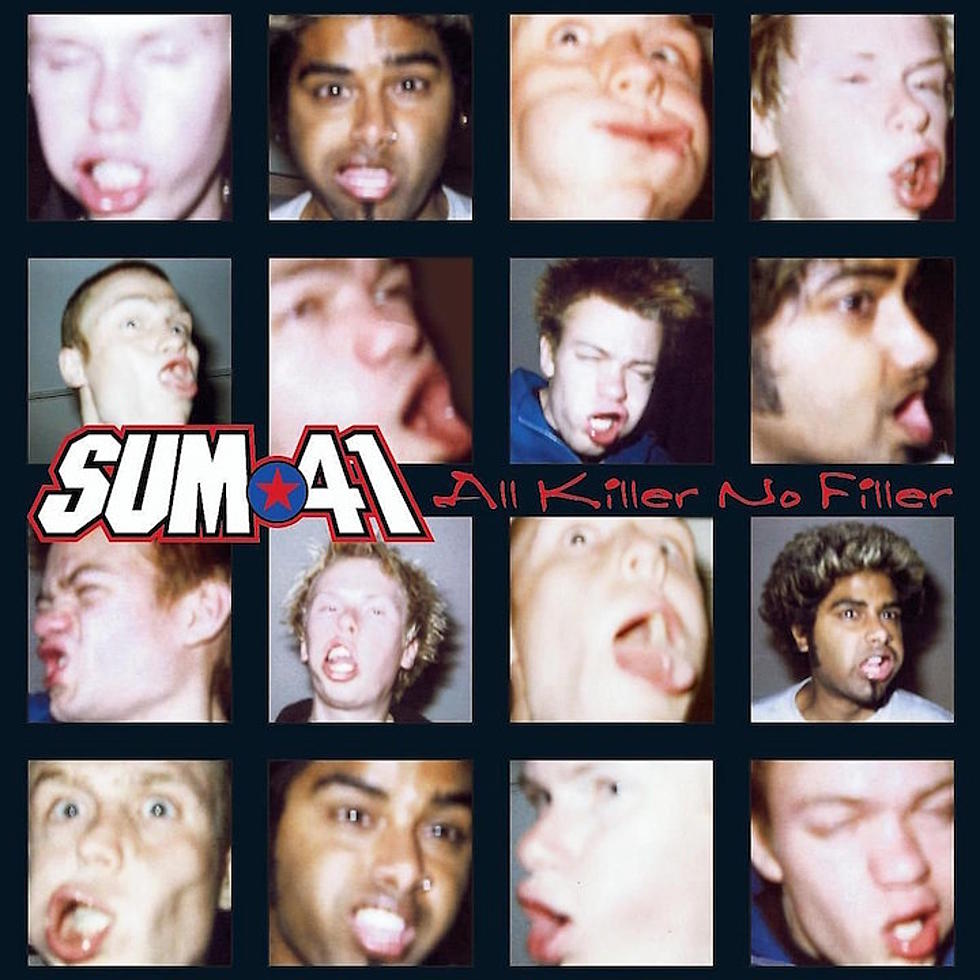
It was a genre that, like MySpace, was at the height of its popularity in the early-to-mid 2000s. I never went all-in on the look, but I embraced the attitude and the vibe (to the extent I could while still being a goodie-goodie). The music was noisy and punk-ish and screamy and angsty, but it was also upbeat and often intentionally silly, immature, or tongue-in-cheek (Exhibit A: the album cover for Sum 41's All Killer No Filler; Exhibit B: Green Day and Blink-182's dedication to potty humor). The aesthetic was thrift stores and t-shirts under baggy zip-up hoodies and checkerboard patterns and eyeliner and hair dye, skater-culture Vans and west coast slacker accents. Most of the time, song lyrics lived firmly in the land of Teen Stuff: how difficult/amazing it is to be young, how the adult world is bullshit, what it's like to disappoint your parents or have them disappoint you, how difficult/amazing it is to be the only one who understands, how sad it is when a friend dies in a car crash or commits suicide, how much you love your crush, how your crush would be so much better off with you than she is with her current boyfriend, how heartless and cruel and in retrospect super annoying your ex-girlfriend is, how your ex-girlfriend deserves to be poisoned or maybe die in a car crash. Lots of juvenile irreverence and big feelings.

Perhaps implied: This isn't exactly a genre you would turn to for political art or commentary.

And yet: circa 2002-03, "pop-punk artists process 9/11 in song" became a thing. On albums otherwise fully devoted to teen angst, you would stumble on one track -- just one -- that was a sincere meditation on the attacks on the World Trade Center. It seemed strange at the time, and the existence of these songs continues to cross my mind approximately twice a year.

So, humor me. Let's revisit some of the most memorable tracks together. I've ordered this list roughly from worst to best. (My ranking methodology is scientific and I will hear no objections, thank you.)


The Innocent (2001)
by Good Charlotte, Mest, and Goldfinger

Sample lyrics:

Hate has turned to others
For their religion or their skin
But hate can't solve the problem it began
Everyone is angry
People are afraid
And no one knows what decisions will be made
And we don't know why (don't know why)
The innocent die (don't know why)
Will this world ever find a way to change?

Maybe we can forgive this song for being the worst of the bunch, since it was released as a free-floating "tribute" single just nine days after the attacks. Musically, the song is cookie-cutter pop-punk: there's even a flashy guitar slide after the first chorus that is repeated identically after the second. The lyrics manage to be both clunkily literal ("We know it's not right / We don't know why so many had to die") and irritatingly vague (who's angry? everyone! who's afraid? people! what needs to change? the world.). It's not that it's objectively terrible as much as it sounds like the kind of song an Earnest Pop-Punk Music Generator app would produce if informed about 9/11. 


Skylines and Turnstiles (2002)
by My Chemical Romance

Sample lyrics: 

And in this moment, we can't close the lids, on burning eyes
Our memories blanket us, with friends we know, like fallout vapors
Steel corpses stretch out towards an ending sun
Scorched and black, it reaches in and tears your flesh apart
As ice cold hands rip into your heart
That's if you've still got one that's left
Inside that cave you call a chest
And after seeing what we saw
Can we still reclaim our innocence?

Weirdly, I think this song has the opposite problem as "The Innocent." Whereas "The Innocent" bashes you in the face with HELLO THIS IS A 9/11 SONG, I suspect the main reason we recognize "Skylines and Turnstiles" as a 9/11 song is because the lead singer/songwriter gave interviews saying so. Like a lot of early MCR, the song is a rambling/warbling mess. (I disliked this band until their songs got tighter and more structured, at which point I loved them.) Lyrically, it's possible to listen to this track and assume it's generically about being a corporate drone in the big city and feeling dead inside ("We walk in single file, we light our rails, and punch our time / Ride escalators colder than a cell") and even the more obvious imagery (the lyrics I copied/pasted above) isn't that different from what you'll find in a typical MCR song. That said, when it comes to Art Cred, oblique is better than too obvious.


Believe (2003)
by Yellowcard

Sample lyrics:

Think about the chance I never had to say
Thank you for giving up your life that day
Never fearing, only hearing voices calling out
Let it all go, the life that you know
Just to bring them down alive
And you still came back for me
You were strong and you believed

There are two jarring aspects to this otherwise perfectly palatable, laudatory ode to 9/11 first responders. The first is the part in the bridge when the then-unmarried, 21-year-old front man sings, "Want to hold my wife when I get home / Want to tell my kids they'll never know / How much I love to see them smile." (Wife? Kids? Why? Granted, this isn't the only Yellowcard song in which the singer assumes the voice of a character. In "Gifts and Curses," the speaker is Spiderman.) The other jarring thing is when the song straight-up samples speeches from the one-year memorial for the WTC attack, including parts of Mayor Bloomberg's remarks and NY Governor Pataki quoting the "little note nor long remember" line from the Gettysburg Address. I like the music -- Yellowcard's violinist consistently classes up their songs -- but those audio samples take this song from "endearingly earnest" to "cringingly earnest."


Elevator (2002)
by Box Car Racer

Sample lyrics: 

The concrete looks too thin to break my fall
The sunset stretched across this nighttime scene

I counted people as I neared the street below


I saw it all, I saw it all go down

The shadow grew as he approached the ground

The sunset stretched across this nighttime scene

I turned away as he came near the street below

In a twist no one would expect, Tom DeLonge's solo project is the most specific and ambitious entry of the bunch conceptually, even if it's in dubious taste. Rather than trying to comment on 9/11 as a whole, the song focuses on a single person forced out the window of one of the WTC towers, with alternating verses taking the perspective of the person falling, and then a person on the street watching him fall. The lyrics are fittingly queasy and sparsely poetic (I know! From the Blink-182 guy!). The lengthy outro repeats the line "Let's forget this all, move on," which is an interesting contradiction of the "Never Forget" vow associated with the attacks. The biggest problem is the music: it's typical Box Car Racer, with DeLonge bleeting over quick-paced drums and strum-strummy guitar. It doesn't really suit the lyrics.


Truth (2002)
by SR-71

Sample lyrics:  

All the fears
All the lies

They were here

All the time


The mouth of New York City talks

Spitting dust from streets to sidewalks

Pictures soaked in gasoline

Twisting through the steel and concrete

The smoke has cleared but I can't breathe

"Truth" succeeds the most by avoiding the pitfalls I complained about in the previous songs. The subject matter is clear without being groaningly obvious, and the metaphor of a mouth talking/spitting/breathing is vivid imagery that gives the song focus. The messaging avoids simplistic "terrorism is bad and sad" or "heroes are good" themes, though it's hard to know in which direction to interpret the references to "fear," "lies," and "truth." The thing that nudges this song to the top of my list is that the music suits the subject matter: SR-71 offers the hardest-rock track on this list, and they break out metal bass riffs and air-raid-siren-y guitar wails, which complement the lyrics' descriptions of destruction. There's a moment right at the end of the song, when the music is rocking the loudest, where the entire band cuts out and there's a split second of silence before the final line crashes in.


To address a possible elephant in the room: With the exception of "Believe," all of these songs were written and released by 2002, which means they predate, for example, the invasion of Iraq. In subsequent years, some emo/pop-punk artists would begin dabbling in anti-war/anti-militarism sentiments (see for example the Rock Against Bush compilations, Green Day's American Idiot, Yellowcard's "Two Weeks from Twenty," Thursday's "Friends in the Armed Forces," etc.).

But the songs I focused on here aren't War on Terror songs; they're tribute songs, strictly about mourning and memorializing the events of 9/11. I think that's why this bubble of pop-punk tracks has fascinated me for so many years: the peculiar subgenre of "earnest 9/11 tributes" is perhaps most strongly associated with country music artists, but the emo/pop-punk contingent (unsurprisingly) strikes a different tone -- less rah-rah-America and resiliency, more anguish and horror. It's a weird but, I think, mostly welcome contribution.


Monday, January 4, 2021

A simple song, to say what you've done

Creating a "Predictions of Varying Certainty" list to mark the New Year became my blogtacular tradition many years ago for two main reasons: 1) New Years resolutions are too mainstream/passe for a hep cat like myself, and 2) On average, nothing much changes from year to year. In adulthood, life becomes pretty routinized. Making reasonably assured predictions about what my life will be like for the coming year enables me to focus on the granularities, the little changes and achievements that gently steer my world in one direction or another, and track the gaps that appear between expectation and reality.

It's a tradition that explicitly, necessarily omits major unexpected events. Natural disaster. Death. Catastrophic accident. Diagnosis. Pandemic. It's the Big Bad Stuff, really, that hits you hard and by surprise. Life is filled with Good Things, of course, but they're more likely to be planned (weddings! babies!), smaller scale (promotions!), or slow burning (honing a new skill!).

Most years, I fail to appreciate the blessed anticlimax of my New Years listmaking.
Every list filled with mundane milestones and anticipated activities carries the unspoken hope that the year won't actually bring much more than that. A boring end-of-year review means that my life wasn't derailed in one way or another by disaster or tragedy. Most years, I don't look back at my start-of-year predictions and feel prompted to think, "Oof" or "Hoo boy..."

----

Predictions of Varying Certainty for 2020:
- Our baby will be born within a day or two of the estimated due date. GR and I will greet our newborn still undecided about their name.
- We will not take our baby on an airplane. However, we will travel with the baby to a different state. (Wisconsin counts but will be something of a cop-out way to fulfill this prediction.)
- In contrast to the 2016 Presidential Election -- every twist and turn of which I followed closely for months -- I will self-preservationally keep my distance from the 2020 election circus and will pretty much just show up to vote.
- I will spend fewer days in hospitals and/or rehabilitation centers than I did in 2019.
- I will either 1) go to one museum that I've never visited before, or 2) go to a concert for a band I've never seen live before.
- I will get an Instagram account, roughly five to seven years after everyone else jumped aboard that particular social media train. I will use it mostly for lurking and will actively avoid posting baby photos out of paranoid privacy concerns.


How prescient I actually was:
- The first half of this prediction is disqualified on a technicality: Our baby arrived four days ahead of his due date. And the second half only qualifies on a technicality, too: While we hadn't "officially" decided on his name, GR and I were 98% sure about what it would be and simply confirmed with one another that we were still feeling good about our choice after LT arrived.
- We did not take our baby on an airplane, or to a different state, or anywhere else. Without hyperbole, I can count on one hand the number of buildings LT has been inside during these first nine months of his life, apart from our own house.
- Kind of? I didn't bother watching the debates this time, nor did I read endless op-eds about what new horrors a [second] Trump term would bring; however, 2020's election did drive me to panic-refreshing the electoral map until Biden's win was called, and these days I'm following reports of various Republicans' seditious posturing, despite my ongoing horror and disgust, so... let's call this one a wash.
- This prediction caused some confusion among those who read it, given that I was fully expecting to spend three days in the maternity ward in 2020. This was a backdoor, not-inviting-jinxes way of predicting that my dad would stay on the road to recovery this year. I'm happy to call this one a win.
- NOPE.
- I suppose the pandemic made this, if anything, more likely to happen, but nope. Instead, I upped my Snapchat usage by roughly 3000%, using it as my platform of choice for spamming family and friends with in-the-moment baby photos and videos.


Predictions of Varying Certainty for 2021:
 - GR and I will get vaccinated by the end of June (and not earlier than May). 'Til then, our lives during the first half of the year will feel like a very gradual reopening, as other, more at-risk family members and friends get vaccinated before us, community transmission levels go down, and our circle slowly widens.
 - I will undertake between five and ten small home improvement projects (e.g., repainting a room or exterior door, replacing light switches or house numbers or light fixtures, etc.)
 - LT's first word will be one of the following: dada, mama, duck, or up.
 -
GR and I will spend at least two nights away from LT, leaving him in the capable hands of an aunt/uncle or grandma/grandpa.
 - I'll go on one of Chicago's architecture tours. (Never been! Hear they're great!)
 - I won't return to work in an office, and will instead continue to work from home full time. I will, as always, love this setup.